Antim Sanskar In Sydney: What Happens, How Long It Takes, And Who Can Perform The Rites
If you have lost someone dear, you may be asking what to do next, how to honour them properly, and how to coordinate everything in time. This guide explains Antim Sanskar for Fiji Indian and broader Hindu families in Sydney, from preparation through cremation to post cremation rites. You will see typical timings, who can perform the rites including daughters, and how Agnee coordinates qualified priests and venues so you can focus on prayer and family.
What Antim Sanskar Means
Antim Sanskar is the final rite that helps the soul continue its journey. It is an act of duty and love. Families gather to bathe and prepare the body, offer prayers and mantras, and conduct cremation as prescribed by tradition. While the core principles are shared, practices vary between Fiji Indian, North Indian, South Indian, and Tamil communities. Your family’s customs come first. Our role is to support those customs with care and precision.
The Typical Process, Step by Step.
Every family’s sequence is unique. The outline below shows a common Sydney flow. We plan the timing with your family, your priest, and the crematorium.
- Preparation and viewing
- Ritual bathing or symbolic purification, dressing in fresh clothes, tilak, garland.
- Placing sacred items such as tulsi, ganga jal, rudraksha, or a small coin near the mouth or hands, as per custom.
- Family viewing and final respects, with bhajans or silent prayer.
- Pooja and last rites before leaving
- A brief puja at home, the chapel, or our facility, with mantras, rice, sesame, and lighting of the diya.
- Kriyas performed by the appointed karta, traditionally the eldest child or a close relative.
- Procession to the crematorium
- Gentle transport, arrival at the chapel or cremator room, short prayers and readings.
- Circumambulation of the coffin, offering flowers, rice, or ghee as allowed by the venue.
- Final offerings and cremation
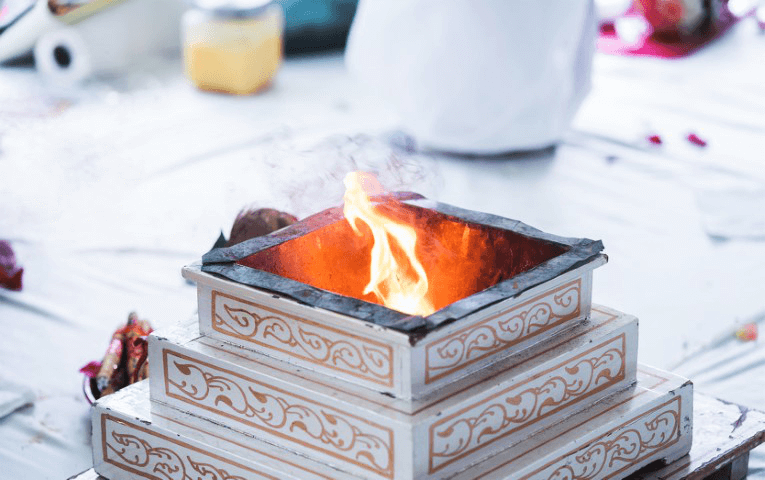
- The priest leads final mantras. In many Fiji Indian and North Indian traditions, the karta places a small offering at the forehead and symbolically lights the fire using the cremator’s approved process.
- The coffin enters the cremator. Families may stay for a few minutes of prayer.
- Ash collection
- In Sydney, ashes are usually ready the next business day. At Agnee, same day ash collection is possible when the cremation occurs before midday, subject to crematorium capacity, paperwork, and conditions. We will confirm this timing in advance so you can plan post cremation rites with confidence.
How Long Antim Sanskar Lasts
- Ceremony at chapel or venue: commonly 45 to 90 minutes, depending on readings, bhajans, and priest guidance.
- Cremation cycle: usually 1.5 to 3 hours based on cremator capacity and the scheduled queue.
- Same day ashes: possible when the booking is before midday and the crematorium confirms availability. Where that is not possible, ashes are ready the next business day.
- Entire final day window: allow 3 to 5 hours including arrival, ceremony, cremation commencement, and family time.
We will help you plan an efficient schedule so elders and children are comfortable and no one feels rushed.
Who Can Perform the Rites
Traditionally the karta is the eldest son. In Sydney, and across many communities, daughters and female relatives may act as karta and perform the last rites. Hindu scripture and contemporary practice both prioritise intention, purity of conduct, and dharma of the family. If a daughter wishes to perform the final rites, we will brief the priest and the venue so that it is supported with dignity. Where there is no immediate child available, a close relative or family friend may be appointed with the family’s consent.
Variations Across Communities
Fiji Indian families often include simple, heartfelt mantras, tulsi or ganga jal, and a clear focus on the karta’s duties. North Indian families may use pind daan with rice balls, sesame, and ghee, followed by 10th or 13th day rites. South Indian and Tamil families may have the priest tie darbha grass, use sacred ash or vibuthi, and chant specific samskara mantras, with the 9th day and 12th or 16th day observances marked carefully. We will match you with a priest familiar with your tradition and language. Rituals can be adapted when elders cannot travel or when the crematorium has safety rules.
What Not To Do When Someone Dies in Hinduism
Customs vary, yet many families observe these cautions:
-
Avoid cutting hair or nails until after the initial rites.
-
Do not cook celebratory foods or hold festive music during the mourning period.
-
Avoid metal or leather adornments during immediate rites; keep clothing simple and modest.
-
Do not delay cremation without cause; timely rites are considered respectful.
-
Avoid mixing ritual items used for the deceased with regular household items until purification is performed.
If you are unsure, speak with your priest. We can also relay guidance gently to visiting relatives so you do not have to.
The 9th Day and the 13th Day
Why the 9th day matters:
-
In several South Indian and Tamil traditions, the 9th day is a key milestone for prayers that support the soul’s journey.
-
Families may offer rice, sesame, and water, and distribute simple food in remembrance.
What happens on the 13th day:
-
Across many Fiji Indian and North Indian lineages, the 13th day marks the completion of the initial mourning period.
-
Families perform shraddh or a memorial puja, offer pind daan, read from Gita or Ramayan, and may hold a community meal.
-
Your priest will advise whether your family’s tradition observes the 10th, 12th, 13th, or 16th day as the main milestone.
We can help schedule the priest, arrange a suitable space, and coordinate ash immersion or scattering if part of your plan.
How Agnee Supports You on the Final Day
- Priest coordination: We arrange a qualified Hindu funeral priest experienced with Fiji Indian, North, South, and Tamil customs. The priest will brief the karta step by step.
- Venue and timing: We book the chapel and cremator time, align viewing, puja, and arrival so your family is not waiting. Where possible we plan a morning slot to enable same day ash collection.
- Documentation: Our funeral director is JP accredited, and we manage permits, certificates, and crematorium forms so delays do not interrupt your rites.
- Ashes and follow up: We guide you on ash collection, storage, and immersion, including local options or repatriation if you wish to return the ashes to India or Fiji.
If you need a team that understands your customs and speaks to you with warmth and clarity, we are here 24 hours.
FAQs, Answered Simply
- What is the process of Antim Sanskar? Preparation and viewing, puja and last rites, procession, final offerings and cremation, then ash collection and post cremation prayers. The exact sequence is shaped by your tradition.
- How long does Antim Sanskar last? Plan 3 to 5 hours for the final day, with the ceremony 45 to 90 minutes and cremation 1.5 to 3 hours.
- Who can do Antim Sanskar? The karta may be the eldest child, a daughter, another relative, or a chosen representative. Intention and respect are central.
- Can a daughter perform the last rites? Yes. We will ensure the priest and venue support this fully.
- What not to do when someone dies in Hinduism? Avoid festive activities, avoid unnecessary delays, keep attire simple, and follow purification guidance.
- What happens 13 days after death? In many lineages, a memorial rite or shraddh marks the close of the first mourning period with prayers and offerings.
- Why is the 9th day after death important? It is a key prayer milestone in several South Indian and Tamil traditions, with offerings for the soul’s journey.
Planning in Sydney, With Care
When you are ready, we will meet you at home or at the chapel to discuss your family’s wishes. We coordinate the priest, schedule the cremator, organise transport, and confirm whether same day ash collection is possible for your booking. If you are in The Ponds or nearby and wish to plan a morning ceremony, we can also advise on the ponds same-day ash collection so your family can hold prayers later that evening.
We serve families across Western Sydney and can assist with documentation for overseas transport when repatriation is required. If you prefer a Fiji Indian style ceremony or need guidance that reflects Tamil or North Indian customs, we will tailor every step.
Summary
Antim Sanskar is sacred, personal, and healing. In Sydney, your family can honour tradition with a clear plan, a supportive priest, and caring coordination. You now know the typical steps, the usual timing, who may lead the rites including daughters, and the meaning of the 9th and 13th day observances. When you need a steady hand to arrange the ceremony, manage timing, and secure ashes promptly, speak with Agnee. We will look after the details so you can look after each other.